01
Diagnostic performance test.
We record the flow rate, temperature rise and gas consumption before we touch anything.

$195 flat for the full 12-point service.
Houston’s hard water coats the inside of a tankless heat exchanger a little more every time it fires. A unit bought to last 20 years won’t make it past 8 here without regular maintenance. We have maintained more than 1,400 tankless systems across Greater Houston.
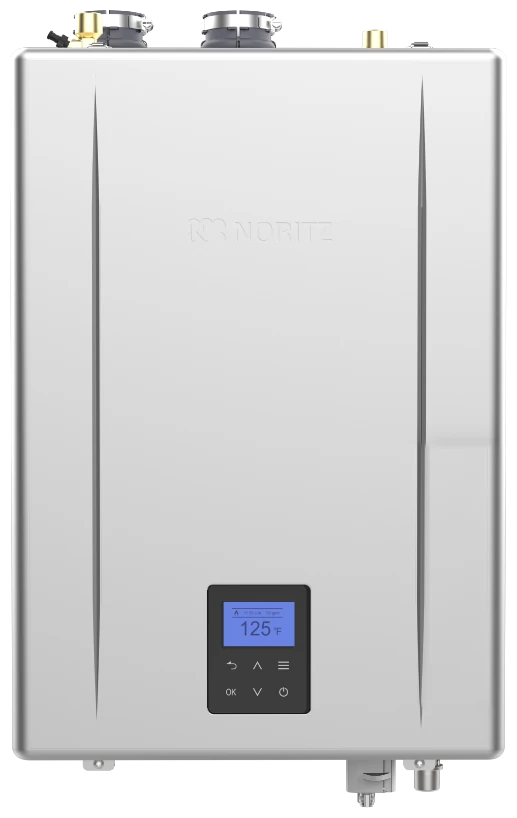
The pattern never changes: skip the annual flush, then pay $1,200 to $2,800 for a heat exchanger replacement that a $195 visit would have prevented.
On units that haven’t been serviced in two or more years, temperature rise often improves by 8 to 15 degrees after a flush, and flow by 0.5 to 1.0 GPM.
Without annual professional flushing, mineral scale chokes efficiency, voids warranties and cuts the life of the system in half.
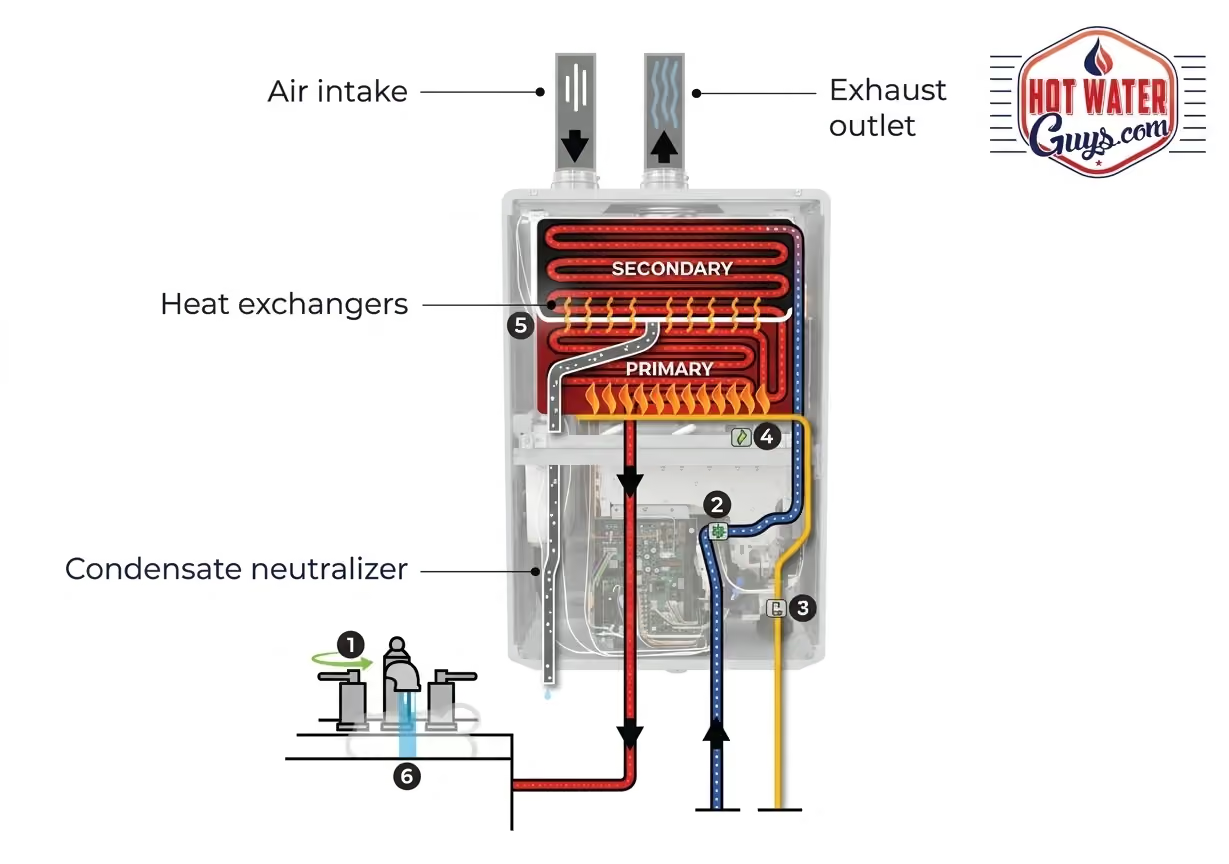
Your heat exchanger works like a radiator made of paper-thin copper or stainless steel fins. Water snakes through narrow passages while a gas burner heats them from below. That is how you get instant hot water, and it is exactly where Houston’s scale collects.

City of Houston water averaged about 8 grains per gallon of hardness in the City’s 2025 water quality report, a level the USGS classifies as hard. Each time the unit fires, those minerals heat, solidify and coat the heat exchanger like cholesterol in an artery. Slowly, until one morning the shower goes lukewarm and the unit throws an error code you’ve never seen.
After two years without a flush, we typically pull out chunks of calcium the size of rice grains. After three, some units are so clogged that water flow drops by 30 to 40 percent. The burner runs harder and longer, the blower motor strains, the gas valve cycles more aggressively and your gas bill creeps up $15 to $25 a month.
Insulated by scale, the heat exchanger can’t shed heat properly and warps from thermal stress. Stress fractures cause pinhole leaks that drip water onto electrical components. By then you need tankless repair or a full system replacement.
Most Houston homeowners think a tankless water heater is maintenance-free, whatever the salesperson said. It isn’t.
We don’t show up, run some vinegar through your unit and call it a day. Our 12 checkpoints address every failure we have come across in more than 1,400 Houston tankless systems. Here is what that covers.
Before we touch anything, we measure the flow rate, temperature rise and gas consumption. That gives you a before-and-after comparison of what the service achieved. Most homeowners are surprised by how much performance they had lost without noticing.
We connect a commercial-grade circulation pump and run professional descaling solution through the heat exchanger for 45 to 60 minutes, at a consistent flow and pressure. The solution is formulated for tankless heat exchangers, so it dissolves calcium and magnesium deposits without corroding copper, stainless steel or rubber gaskets. We monitor the solution’s pH throughout. When it stops changing, the scale is gone. Rushing this step leaves deposits behind, which defeats the purpose.
Some YouTube videos suggest running white vinegar through the unit. We have flushed systems where the homeowner had done exactly that for three years, and the vinegar had barely touched the scale. White vinegar is about 5% acetic acid. It works on light surface deposits, but Houston’s water forms calcium carbonate scale that bonds to the metal at a molecular level. After 12 months baking onto copper fins at 140-plus degrees, household vinegar isn’t strong enough to dissolve it efficiently.
Every tankless unit has a small mesh filter where the cold water enters, and the sediment in Houston’s water clogs it over time. A restricted filter reduces flow, which causes that annoying hot-cold-hot pattern in the shower. We pull it, clean it thoroughly and inspect it for damage.
We remove the burner cover and look for sooting, discoloration and debris. A dirty burner doesn’t ignite cleanly, which wastes gas and can produce carbon monoxide. Houston’s humidity and occasional flooding can bring moisture into burner chambers, so this check matters more here than in drier climates.
We inspect the whole vent run, from the unit to where it ends outside. Bird nests, wasp nests and shifted PVC joints are more common than you’d think in Houston, and a blocked or disconnected vent can push carbon monoxide into your home. We don’t take this check lightly.
With a manometer, we confirm that the gas pressure at the unit matches the manufacturer’s specification, typically 3.5 to 4.0 inches of water column for natural gas. Too low and the unit underperforms. Too high and you risk damaging the gas valve. Houston’s gas pressure can shift with the seasons, especially in newer subdivisions where the infrastructure is still settling.
Condensing units, increasingly common in Houston installations, produce acidic condensate that drains through a small line. If the line clogs, the unit shuts down with exhaust-temperature error codes. We clear the drain and clean the temperature sensors that control combustion. They drift over time and can make the unit run lean or rich, wasting gas either way.
After descaling, we measure the incoming cold water temperature and the outgoing hot water temperature at maximum flow. The difference between the two is your Delta T. In Houston, where incoming water averages about 67°F on Rinnai’s groundwater map and shifts with the seasons, a healthy unit should produce a Delta T of 40 to 60 degrees, depending on the model and the incoming water temperature. Below 35 degrees at normal flow, something is wrong: scale remains, the burner isn’t firing at full capacity or the unit is undersized for the home. We work out which one during the visit.
Once everything is cleaned, inspected and adjusted, we repeat the baseline test and show you both sets of numbers.
Rinnai units from 2018 and earlier have a known issue with flame rod corrosion in humid climates. Navien’s NPN series has a condensate trap design that clogs faster in Houston’s hard water than Navien’s own maintenance schedule accounts for. Noritz units installed with an improper vent slope, which we see constantly, develop condensation pooling that corrodes the heat exchanger from the outside in. When we spot a model-specific issue, we flag it before it becomes a bigger repair.
For most Houston homes, once a year is the right cadence. If your water is particularly hard (above 15 grains per gallon) or your household uses more than 80 gallons of hot water a day, twice a year is better, and we can test your water hardness on the first visit. Early fall is the best time to book, before Houston’s brief cold season when the unit works hardest. If it has been two or more years since the last flush, don’t wait for an error code. We’ll get your system back to factory performance before something breaks that didn’t have to. For a tank water heater, our water heater repair service is the place to start.
We serve every corner of Greater Houston, from Katy to Baytown and Sugar Land to The Woodlands. Call 832-673-0909 or contact us for a quick quote over the phone. Most appointments are available within 48 hours, and two-hour arrival windows mean you don’t lose your whole day waiting.
$195 flat
Covers the 12-point service, the descaling solution and your written report. Extra parts only if you approve them.
Our annual tankless flush is $195 flat. If the inspection turns up something that needs attention, like a failing igniter or a corroded flame rod, we tell you exactly what it costs and let you decide. We carry the most common replacement parts on our trucks, so approved work can usually be done on the same visit.
Common add-ons during a maintenance visit are inline filter replacement ($35 to $45), flame rod replacement ($85 to $120), condensate neutralizer replacement ($65 to $95) and thermal fuse replacement ($50 to $75). None of them is needed at every visit, and we’ll never push a part that doesn’t need replacing.
Four stages, from a baseline performance test to a report you can show your manufacturer.
We record the flow rate, temperature rise and gas consumption before we touch anything.
A circulation pump runs descaling solution through the heat exchanger for 45 to 60 minutes, until the pH stops changing.
We clean the inline filter, inspect the burner, check the full vent run and verify the gas pressure with a manometer.
We repeat the performance test, show you the numbers side by side and send a dated, itemized report for your warranty records.
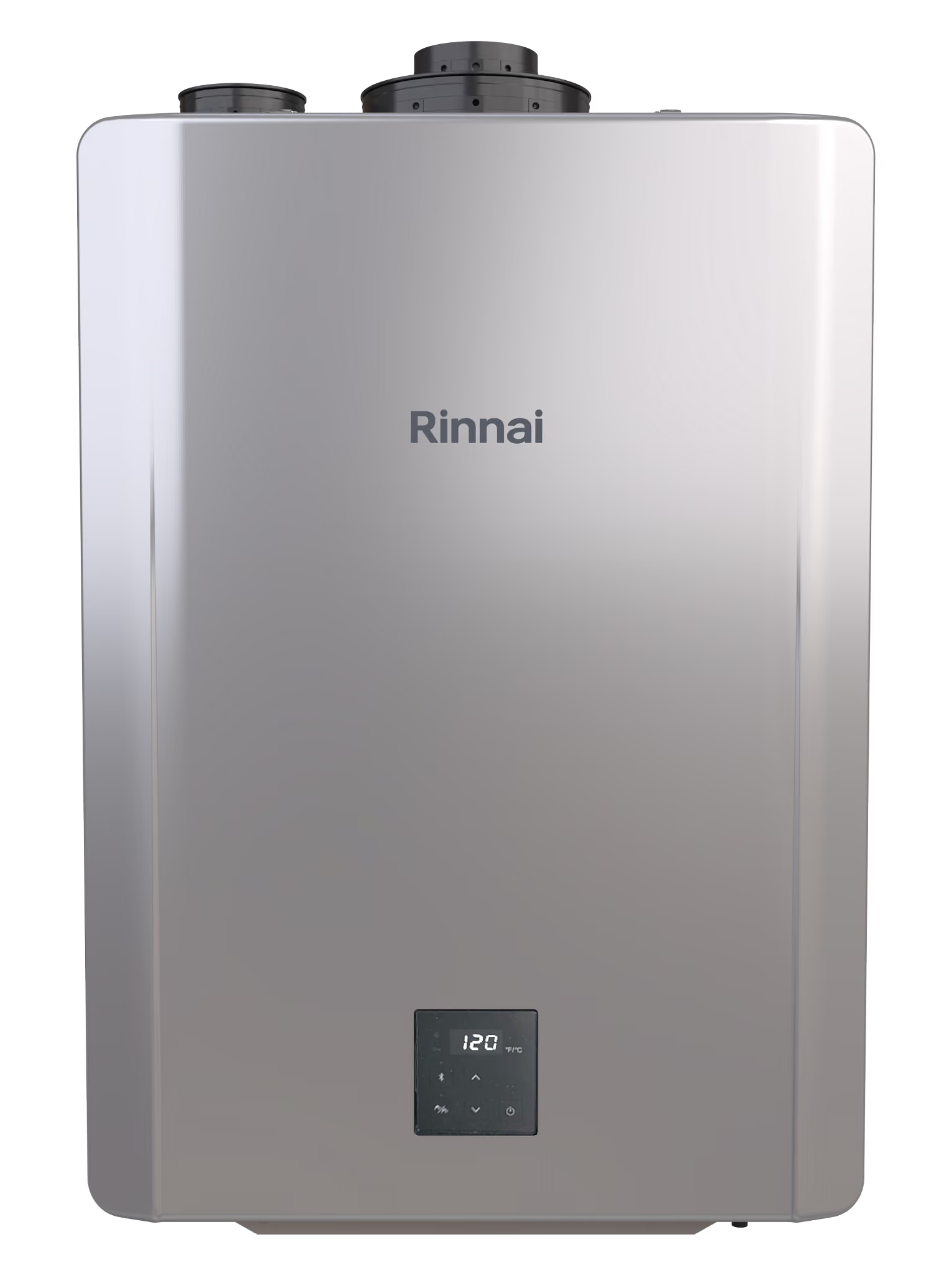
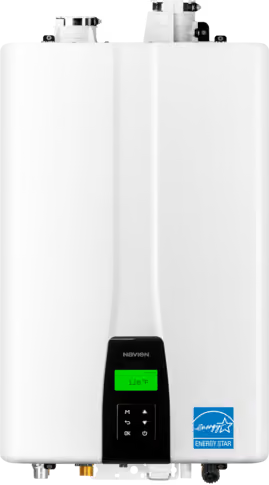
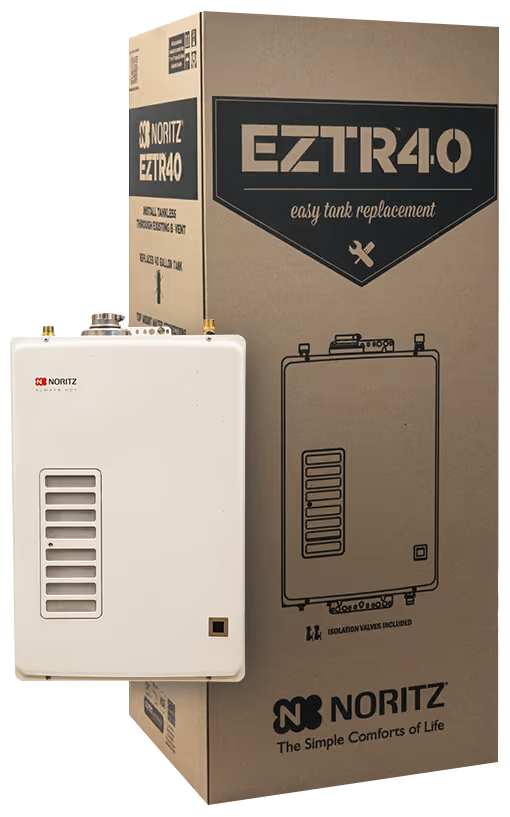
We have maintained tankless water heaters across Greater Houston since before most plumbers in town had installed one, and we flush them every day. We know what to look for on Rinnai, Navien and Noritz units, from older Rinnai flame rods to Navien NPN condensate traps.
Condensing models also get their condensate drain cleared and their combustion sensors cleaned, because a clogged drain shuts the unit down and drifting sensors waste gas.
Most manufacturers require regular professional maintenance to keep a warranty valid. “My tankless has a 12-year warranty, so I’m covered” is the myth that costs Houston homeowners the most. Read the fine print. Rinnai’s residential warranty requires “annual professional maintenance” to remain valid. Navien’s warranty states that damage caused by “lime, scale, or sediment” is not covered. Noritz requires proof of professional descaling in hard water areas, and Houston qualifies.
Every visit ends with a dated, itemized report: the date of service, the technician’s name and license number, your unit’s serial number, all 12 checkpoint results, before-and-after numbers and photos of any areas of concern. We email it to you and keep it in our system. If a manufacturer ever questions your maintenance history, one phone call to us gets them everything they need. That report alone is worth the $195.
Confirm the service address and project with the team. Some areas are subject to an additional travel fee.
Manufacturers recommend maintenance once a year. Incoming water temperature, how often the unit runs and your water quality greatly affect how often it needs maintenance, so it’s best to let the technician recommend the interval. For most Houston homes, once a year is right. With water above 15 grains per gallon of hardness, or more than 80 gallons of hot water a day, twice a year is better.
Maintenance typically includes descaling to remove mineral buildup, cleaning the air filter, checking the burner or heating element and inspecting the venting system. Regular checks make sure every component is working correctly. Our 12-point service also covers the inline water filter, gas pressure, the condensate drain on condensing models and a before-and-after performance test.
Some basic tasks, like cleaning the air filter, can be done by homeowners. A thorough service is best left to a professional, so every component is properly inspected and serviced. Household vinegar also isn’t strong enough to dissolve Houston’s hardened scale efficiently.
Inconsistent water temperature, reduced water flow, strange noises and error codes on the display. These symptoms point to potential issues that need professional attention.
It can extend it significantly by preventing issues that could lead to costly repairs or system failure, and it keeps the unit running efficiently and reliably. In Houston, a tankless unit bought to last 20 years won’t make it past 8 without regular maintenance.
Houston’s hard water leaves a little more scale every time the unit fires. Book the $195 annual flush and keep the written report for your warranty records.